
The Work Safe Harbor of Chester County Does Every Day.
One Shelter. Thirty Years. The Work Safe Harbor of Chester County Does Every Day.
When the Chester County Single Homeless Women's Task Force was formed in 2007, they went looking for options for single women experiencing homelessness in the county.
They found one. Safe Harbor. Four beds.
That finding set off a major expansion effort. In March of 2010, a fully renovated two-story building opened in West Chester, bringing capacity to 20 women and 20 men. Safe Harbor has been that answer ever since, sustained by donations, volunteers, and a community that refuses to let their doors close. Nearly 30 years of operation. 365 days a year, without interruption. They stayed open through COVID when a lot of things didn't.
A Low-Barrier Shelter in a County That Needs One
Safe Harbor operates at 20 N. Matlack Street in West Chester. The shelter serves 20 single men and 20 single women at a time, arranged in dormitory-style housing with separate facilities, laundry, and a kitchenette on the women's floor.
Low-barrier is a term that gets used often in the shelter world, but it carries real weight here. Safe Harbor specifically serves people who don't qualify for other programs operating in the area. The people with the most complicated histories. Those with addiction, legal records, mental health challenges, or circumstances that have caused other organizations to turn them away. The position is straightforward: if you have no place else to turn, this is where you go.
That is not a small thing to commit to, and it's worth saying plainly.
What Life at Safe Harbor Actually Looks Like
Every person who comes through the door gets an intake interview. Not a clipboard and a waiting room, but a real conversation designed to understand their background, identify immediate needs, and begin building a path forward. From that intake comes a personalized action plan, reviewed weekly by the shelter's team.
The basics are covered without question. Three meals a day, every day. Clean bed. Laundry. Showers. Clothing. Personal hygiene supplies. Transportation. ID recovery services, which matters more than most people realize. Losing your identification creates a cascade of problems that makes nearly every other step toward stability significantly harder to take.
The deeper work runs alongside all of that. Case managers work with residents on employment referrals, financial literacy, mental health access, substance abuse counseling when needed, and the often slow and complicated process of securing permanent housing. The goal isn't just to get someone off the street. It's to get them stable enough that they don't end up back on it.
When a resident moves out, the case management doesn't stop. Safe Harbor continues working with former residents specifically to prevent a return to homelessness. It's a recognition that the moment someone walks out with housing isn't the finish line. It's the beginning of a different kind of hard work.
46,000 Meals a Year and the Volunteers Who Make Them Possible
Safe Harbor's Community Lunch Program serves between 45 and 60 people every Monday through Saturday, including holidays. Over the course of a year, that adds up to more than 46,000 meals, most of them prepared and donated by individuals, faith communities, and local businesses. In 2019 alone, Safe Harbor had more than 400 volunteers supporting kitchen and shelter operations.
The lunch program is open to anyone in the surrounding community who is food insecure, not just shelter residents. It's a quiet but meaningful extension of the mission, one that acknowledges homelessness and food insecurity overlap in complicated ways, and that sometimes the right intervention is a meal and a conversation before a crisis becomes a shelter stay.
Why This Donation Matters to Us
Construction is physical work. The things we build are meant to hold up over time and serve the people who depend on them long after we've packed up and moved on. There's a version of that in what Safe Harbor does every day, building stability in people's lives through consistent, unglamorous, necessary work.
The fact that they've kept at it for nearly three decades, sustained largely by the generosity of donors and volunteers in this community, reflects a level of commitment that doesn't get enough recognition.
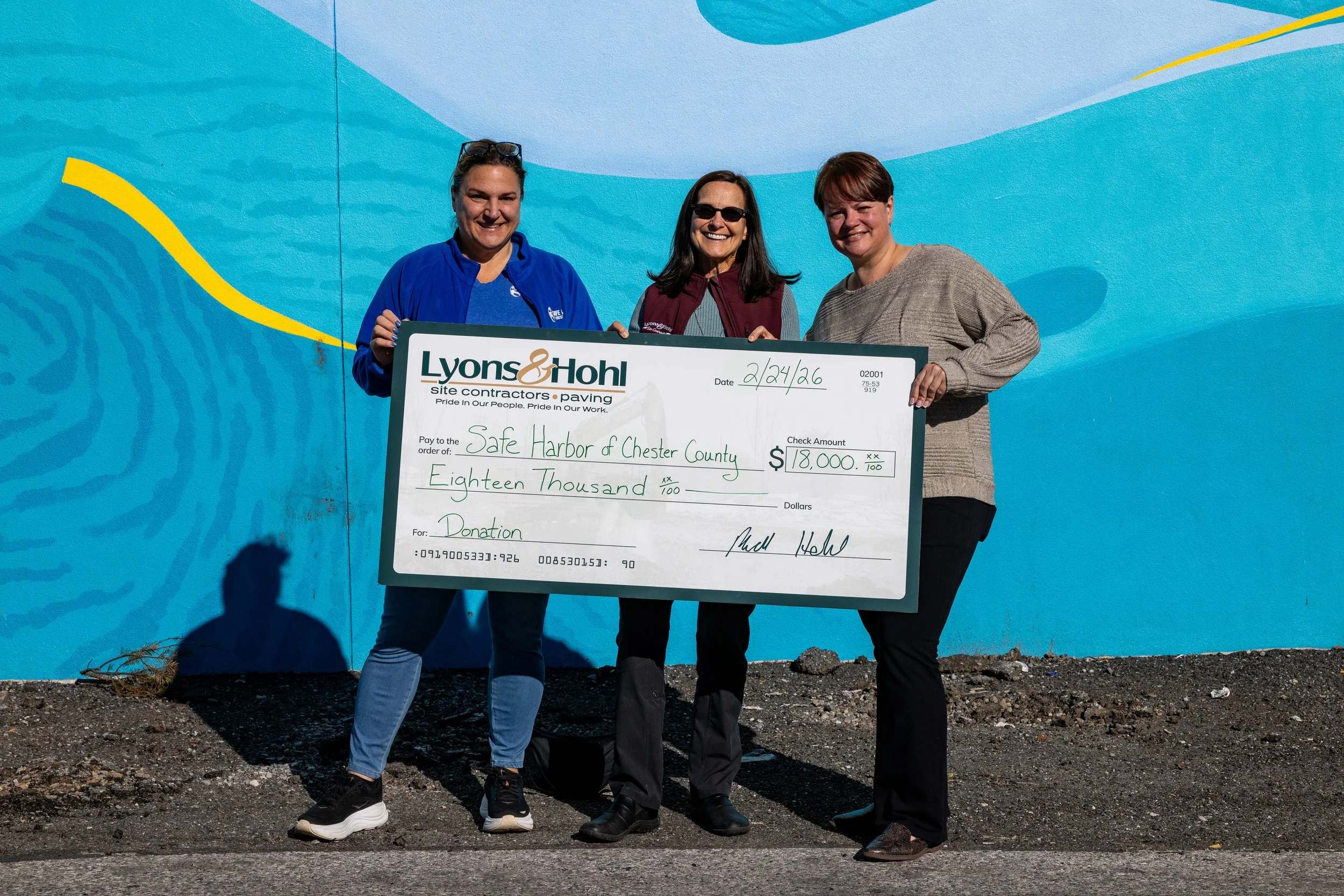
Lyons & Hohl is proud to support Safe Harbor of Chester County with an $18,000 donation. Pictured at the check presentation: Jessica Chappell, Executive Director of Safe Harbor; Ruby Abouraya, Sr. Director of Finance and Growth at Safe Harbor; and Jo Painter from Lyons & Hohl.
This donation is part of a broader giving initiative supporting eight organizations across Chester, Berks, and Lancaster counties. We'll continue sharing each organization's story in the weeks ahead.
To learn more about Safe Harbor, volunteer, or make a donation, visit safeharborofcc.org. If you or someone you know needs shelter in Chester County, call 2-1-1 or text your zip code to 898-211.